
Governance in Practice: Stress-Testing CognateHelix Before Launch
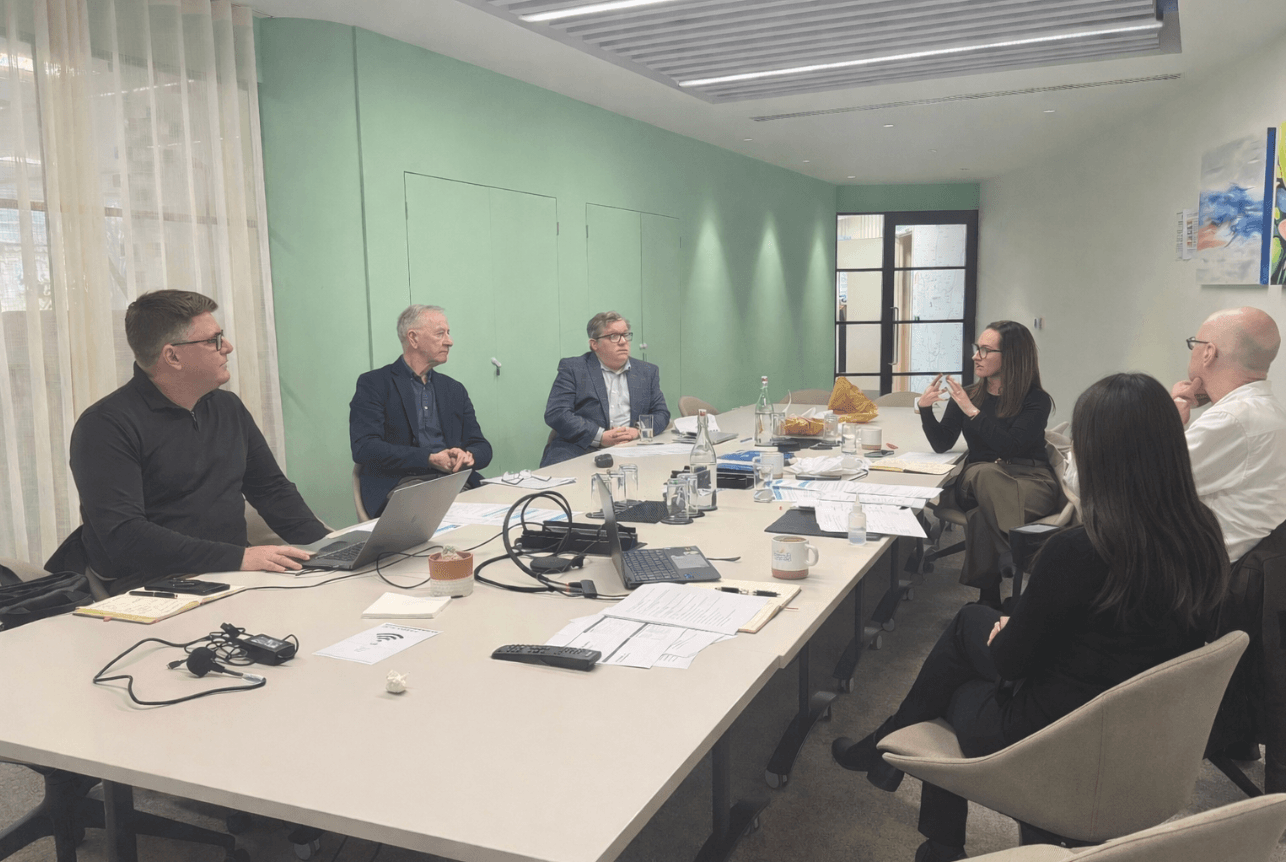
On 26 February 2026, CognateUK convened a structured Critical Review of the CognateHelix programme at Innovate Cambridge ahead of its planned August launch.
This was not a showcase. It was a stress test.
Chaired by Dr Martin Reynolds, the hybrid session brought together experienced school leaders, industry practitioners, and governance advisers — both in-room and online — to examine whether the model holds together educationally, operationally, and ethically.
Responsible innovation requires scrutiny before scale.
Why We Held the Review
CognateHelix is designed as a governance-conscious enrichment model for 16–17 year olds exploring life sciences in an AI-mediated environment.
Before wider delivery, three questions required disciplined challenge:
External legibility — Can the programme be explained clearly to schools, families, and industry without drifting into qualification or admissions language?
Peer learning realism — Is the cross-border collaborative design educationally sound and practically deliverable?
No-over-promise integrity — Can expectations remain measured with high-aspiration families?
The objective was clarity — not endorsement.
Stress Test 1: External Legibility
Advisers examined whether the programme’s value proposition can be articulated simply and responsibly.
The discussion reinforced the importance of framing value around judgement, articulation, and subject engagement — rather than admissions uplift. In a landscape where AI is reshaping university assessment and recruitment processes, clarity of language is as important as curriculum design.
Clear benefit statements and FAQ materials were identified as priorities before Easter.
Stress Test 2: Peer Learning Realism
The second session examined the collaborative architecture underpinning CognateHelix.
EFEC (Excellence First Enterprise Consultancy) draws on two decades of UK–China education partnership experience to inform this structured peer learning model. Collaboration is treated not as an add-on, but as the mechanism for learning — moving through a disciplined cycle of shared question, structured interaction, guided reflection, capability articulation, and iterative reframing.
Advisers examined safeguarding controls, facilitation demands, and cohort balance. Particular attention was given to tutor-led moderation, closed AI platform architecture, and alignment with UK safeguarding expectations.
The emphasis remained on bounded design, not ambition alone.
The educational value of structured cross-context collaboration was also tested. When carefully designed, peer learning across different educational and cultural environments develops perspective-taking, reasoning across knowledge traditions, and comfort with intellectual uncertainty.
CognateHelix treats this as mutual.
Both cohorts are learners.
Both cohorts are challenged.
Stress Test 3: No-Over-Promise Integrity
The final session focused on commercial and ethical clarity.
The group affirmed a simple principle: CognateHelix develops capability, perspective, and portfolio evidence. It does not guarantee university outcomes.
A developmental portfolio — rather than a graded or certificated outcome — was confirmed as the most responsible format for this domain. In AI-mediated environments, tools and practices evolve rapidly. Durable learning lies not in a fixed answer, but in the learner’s ability to frame problems carefully, document reasoning transparently, and revise judgements over time.
The group noted that portfolio completion naturally fits the UCAS cycle — a feature of the programme’s design that reflects its commitment to working alongside A-level study rather than across it.
Responsible design is as much about boundaries as aspiration.
What Emerged
Three themes shaped the synthesis:
Language clarity — Communications must remain simple and free of implicit admissions claims.
Structural realism — Early anchor-school partnerships are preferable to diffuse recruitment.
Governance discipline — AI usage and safeguarding frameworks must remain explicit and aligned with sector guidance.
Moving Forward
This review forms part of CognateUK’s governance-led development process.
Innovation in pre-university enrichment does not require acceleration at all costs. It requires clarity of purpose, educational realism, and disciplined restraint.
CognateHelix will now progress through structured pilot testing, evidence gathering, and continued ecosystem dialogue ahead of its August launch.
We are grateful to Innovate Cambridge for hosting the session and supporting this phase of disciplined development.
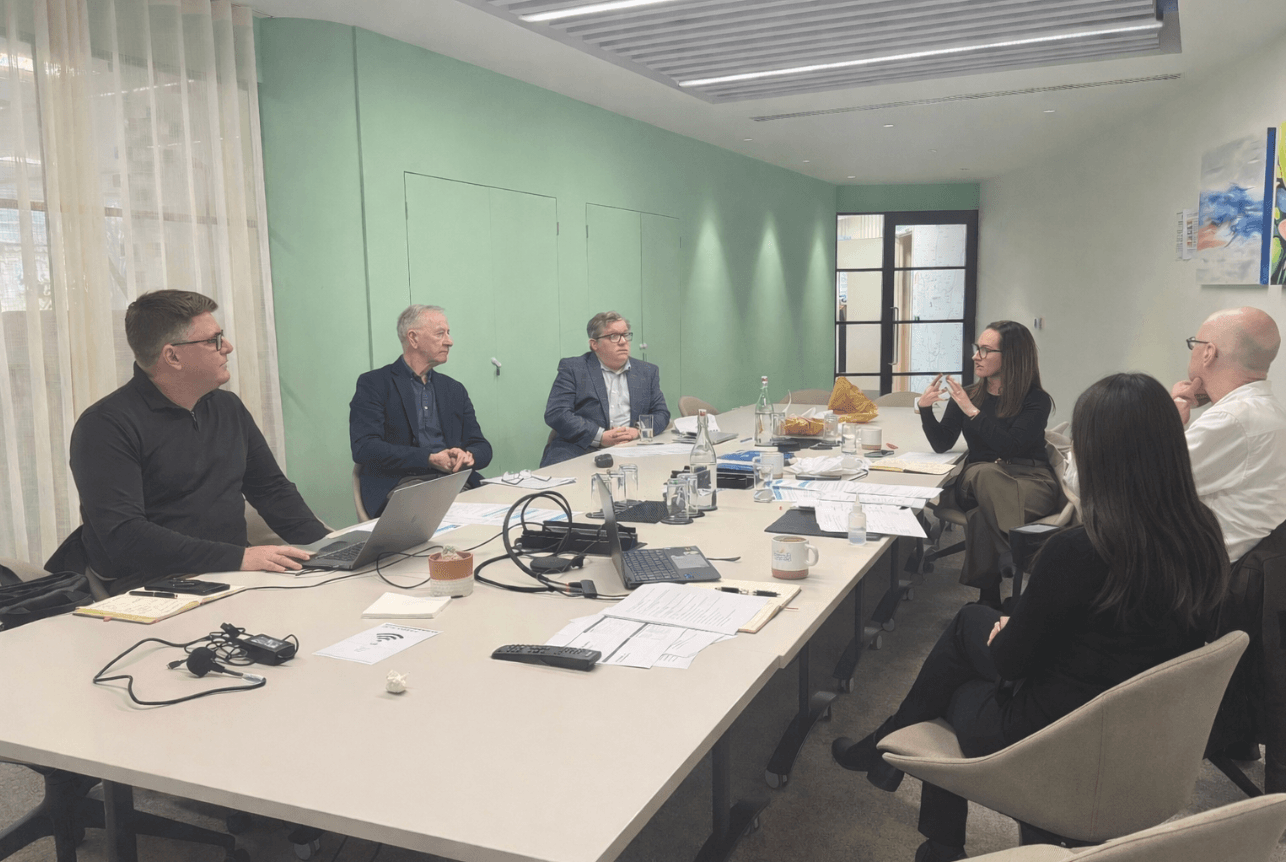
Advisers and team members in structured hybrid discussion during the February 2026 CognateHelix Critical Review at Innovate Cambridge.